
 Item added to cart
Lavinia Fontana (1552-1614) was an Italian painter of the Mannerist school and one of the most important portraitists in Bologna during the late 16th century. August 2014 will mark 400 years since her death so it seems timely to examine her paintings and life as a female artist in the Renaissance period.
She was remarkable in being one of the first women to execute large, publicly commissioned figure paintings. However, it is the artwork below that catches your eye. It is titled
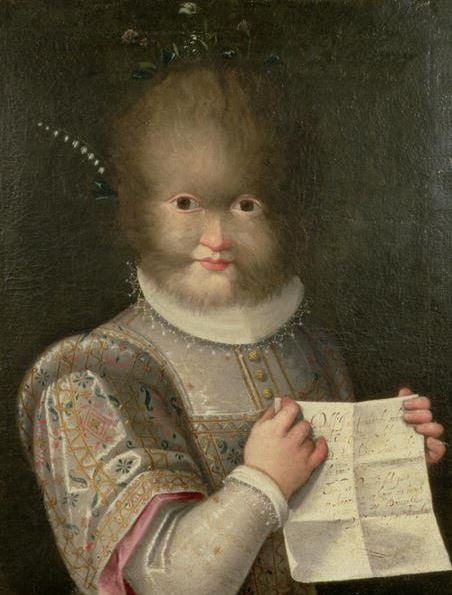
Portrait of a Girl Covered in Hair by Lavinia Fontana (1552-1614) / Photo © Bonhams, London, UK / Bridgeman Images
This bizarre portrait is of a real girl.
Antonietta explains a little of her personal history in the handwritten note which she holds in the portrait: “Don Pietro, a wild man discovered in the Canary Islands…”
Breaking artistic ground
Some writers call Lavinia Fontana the first professional woman painter in Western Europe because her career, heading a workshop, receiving commissions and painting a wide range of subjects is similar to the career of a male artist. Sofonisba Anguissola (c.1532-1625) was one of the first women to gain international fame as an artist but mostly specialised in portraiture.
Particularly unique is that Fontana painted mythological subjects, and in this context, became the first woman to paint female nudes. She did, however, paint a large number of female portraits, and in the course of doing so, documented the lifestyle of Renaissance women.
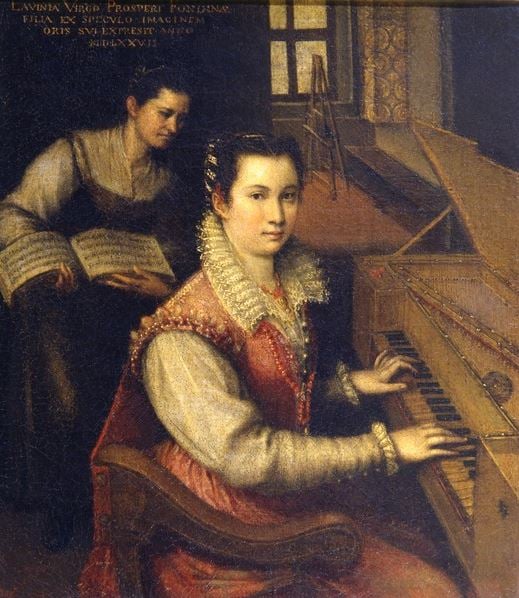
Self Portrait at the Spinet, 1578 by Lavinia Fontana (1552-1614) / Accademia di San Luca, Rome, Italy
Auspicious beginnings
For a woman to become an artist during the Renaissance was unusual but Lavinia had the advantage of being trained by her father, Prospero Fontana, a cosmopolitan fresco artist. Lavinia also had the good fortune to be born in Bologna, an important Italian artistic centre that claimed the painter
Role reversal
Prospero understood that the right marriage was crucial for Lavinia’s future success as a painter and sought connections with a family of good social standing that would accept Lavinia’s career. Fontana married the minor painter Gian Paolo Zappi, who helped tend to the couple’s many children and eventually assisted her in future works. It is probable that Lavinia’s
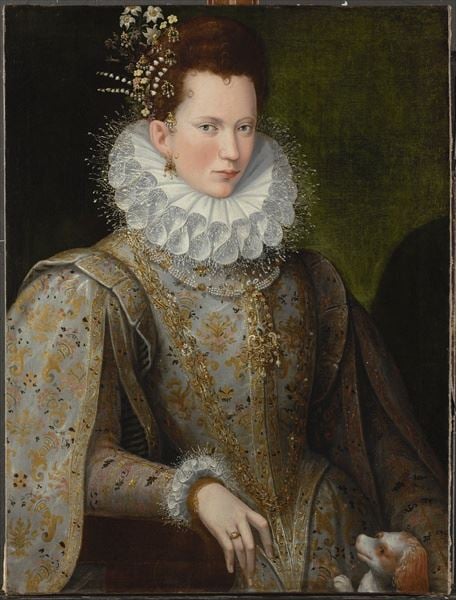
Portrait of a Lady, 1590s by Lavinia Fontana / Photo © Philip Mould Ltd
High society portraits of Renaissance women
We can recognize some of her portraits as being a future bride. The painting would serve as a record of the upcoming marriage as well as a visual record of the wealth going into the marriage via the finery of her costume. A later stage of life, widowhood, might be painted as well.
 |
 |
|
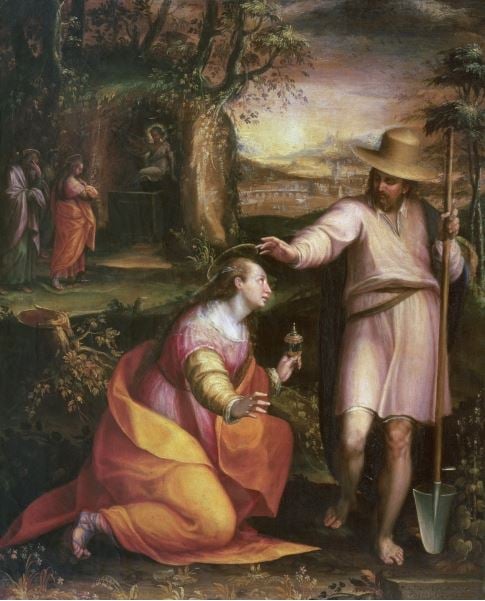
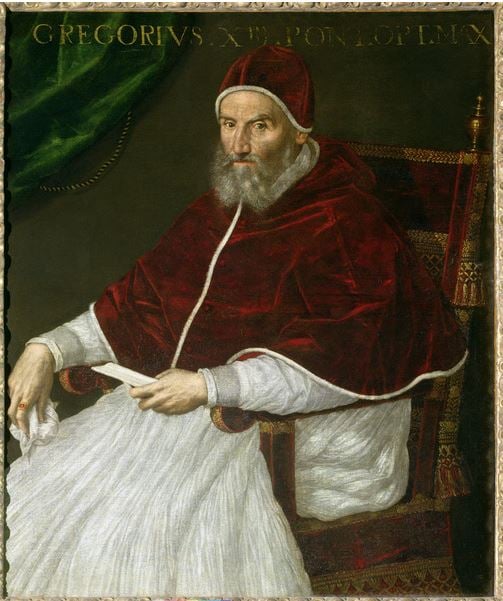
| Noli me Tangere, 1581 by Lavinia Fontana (1552-1614) / Galleria degli Uffizi, Florence, Italy | Portrait of Pope Gregory XIII (1502-85) by Lavinia Fontana / Private Collection |
From Bologna to Rome
By the time she reached her thirties, Fontana was respected as a painter of devotional art. Among the best of her religious paintings is
Her contemporaries and patrons, such as
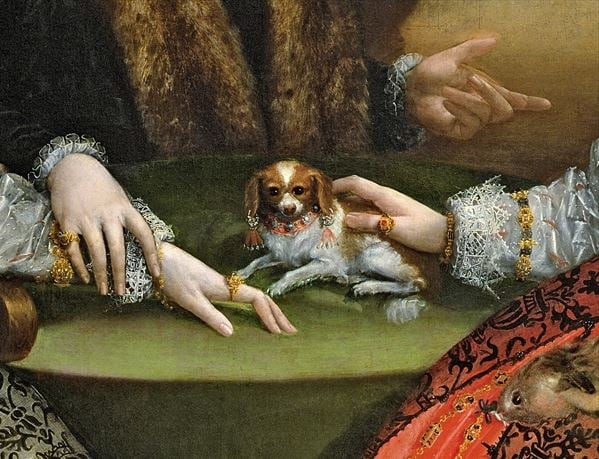
The Gozzadini Family (detail) by Lavinia Fontana (1552-1614) / Pinacoteca Nazionale, Bologna, Italy / Bridgeman Images
Explore More
View all of Lavinia Fontana’s works in the Bridgeman archive
Over 60 Bridgeman images were licensed for Matchlight’s BBC series examining the story of history’s greatest female artists. View a clip detailing the secret meanings in Lavinia Fontana’s art on BBC iPlayer
View our Pinterest board – Important female artists within art history.
Contact our sales team on uksales@bridgemanimages.com for more information regarding licensing, reproduction and copyright.


